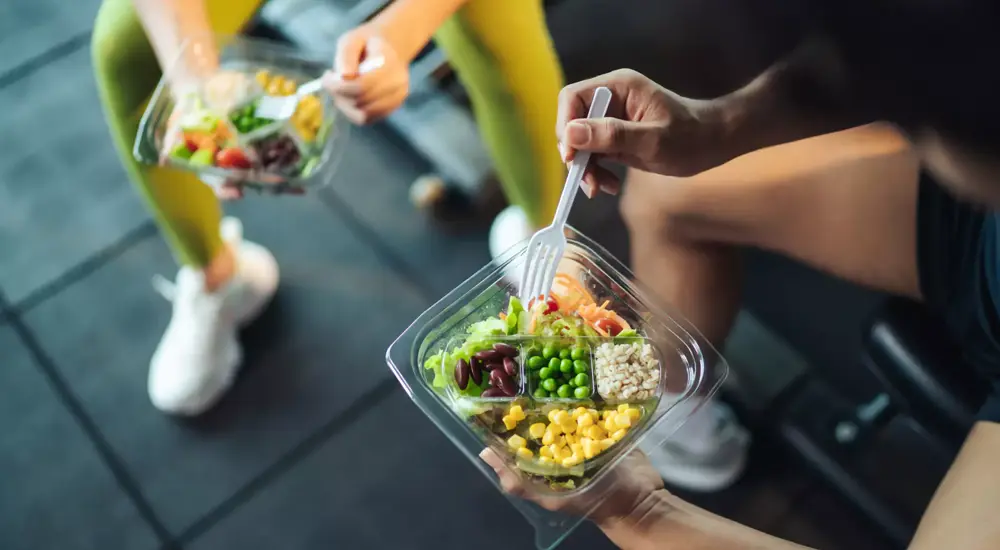
A sports/gym diet is a nutrition plan designed to provide enough energy, protein, carbohydrates, fats, vitamins, minerals, and fluids to support exercise performance, muscle growth, recovery, and overall fitness.
diet changes according to the goal:
For ahealthy adult doing regular gym/sports, a practical starting distribution of total calories is:
For someone focused on muscle gain, protein is often better prescribed by body weight rather than percentage: roughly 1.4–2.0 g/kg/day for regular resistance training.
Note: The ideal intake changes with the person's age, body weight, training intensity, sport, goal (gain/loss/maintenance), and health status. The percentage can vary
A sports/gym diet works by matching nutrition with the body's training demand
The purpose is simple: Pre-workout = fuel the workout and Post-workout = support recovery and muscle growth.
🔹 Pre-Workout — Before Exercise
Goal: Provide energy and prevent excessive fatigue.
Best combination: Carbohydrate + moderate protein + fluids
Examples:
Timing: Usually 1–3 hours before exercise, depending on meal size and individual tolerance.
🔹 Post-Workout — After Exercise
Goal: Replenish energy stores and provide amino acids for muscle repair.
Best combination: Protein + carbohydrate + fluids
Examples:
Note: You don't need to consume food immediately, A balanced meal containing protein and carbohydrates within a few hours is generally sufficient.
A sports and gym diet provides the energy and nutrients required for exercise, muscle growth and recovery. Pre-workout nutrition mainly focuses on carbohydrates and some protein for energy, while post-workout nutrition provides protein and carbohydrates for muscle repair and glycogen replenishment. Adequate daily protein, healthy fats, vitamins, minerals and hydration are essential for optimal performance. Calories should be adjusted according to the goal, muscle gain, fat loss or maintenance, along with proper sleep, recovery and consistent training.